Debate · Leadership · 2024–2026
Debate & the Zhixing Debate Club
I joined debate to win arguments. I stayed because it taught me how to listen to the other side without giving up my own.
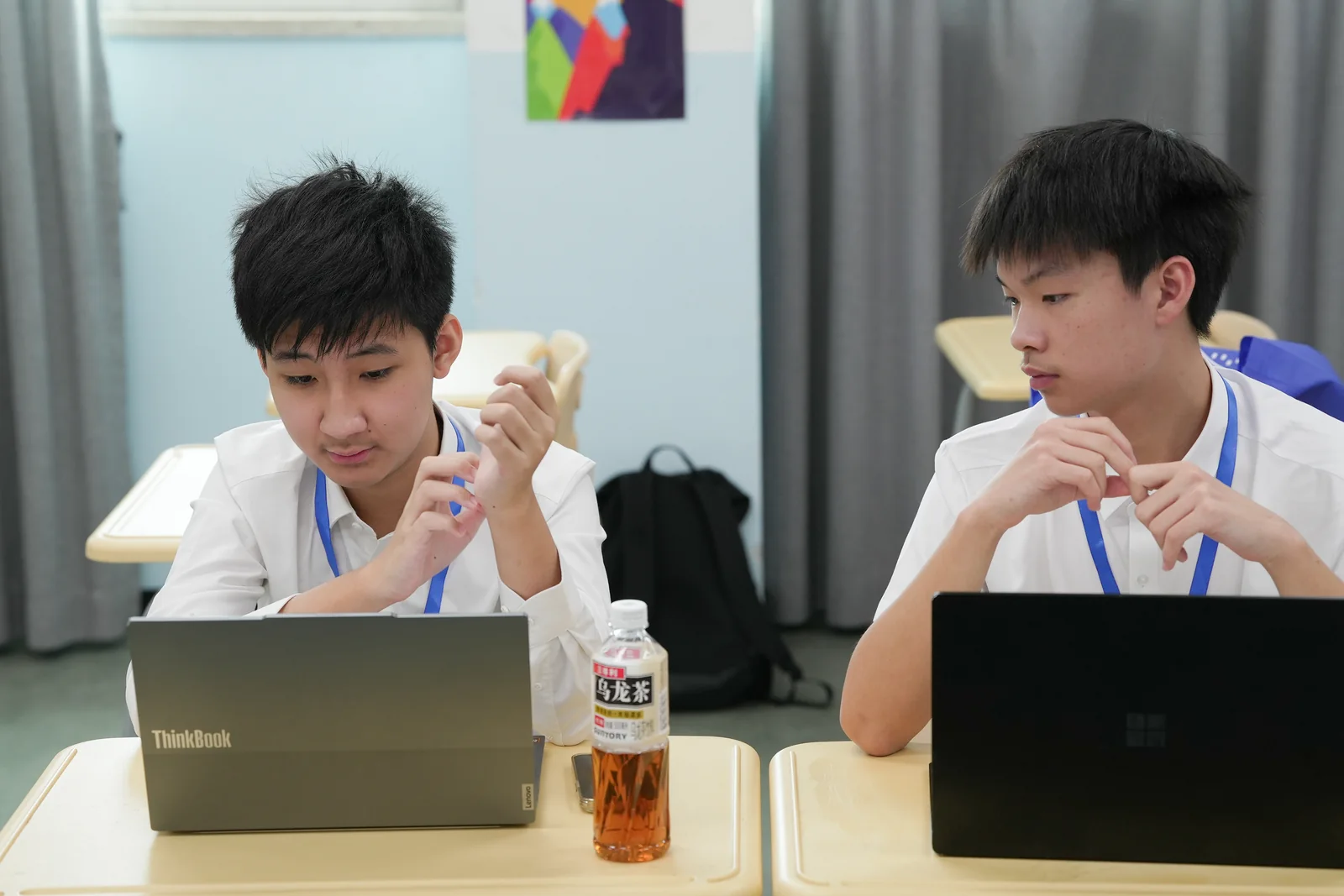
Preparing for a round. The work before the speech is mostly reading, cutting cards, and deciding what not to say.
I liked the puzzle. Then I stayed for the people.
I liked the puzzle of an argument: the moment a claim meets evidence, the rebuttal that changes the shape of the round, the discipline of making a complicated case fit inside seven minutes.
But the longer I competed, the more I cared about the part after the round—the conversation where you find out why someone else sees the same facts differently. That is the part that stayed with me.
From a weekly meeting to a team.
I founded the Zhixing Debate Club in 2024 and built its training program in British Parliamentary and Public Forum. We ran weekly drills, mock rounds, and feedback sessions; the goal was to make debate feel less like a performance and more like a craft.
- Trained 50+ students and built a repeatable training curriculum.
- Co-organized Greater Bay Area tournaments with 100+ debaters from 10+ schools.
- Ran three school-wide competitions for 200+ students.
The club became the school's designated English-immersion brand club—a place where students could argue seriously without taking themselves too seriously.
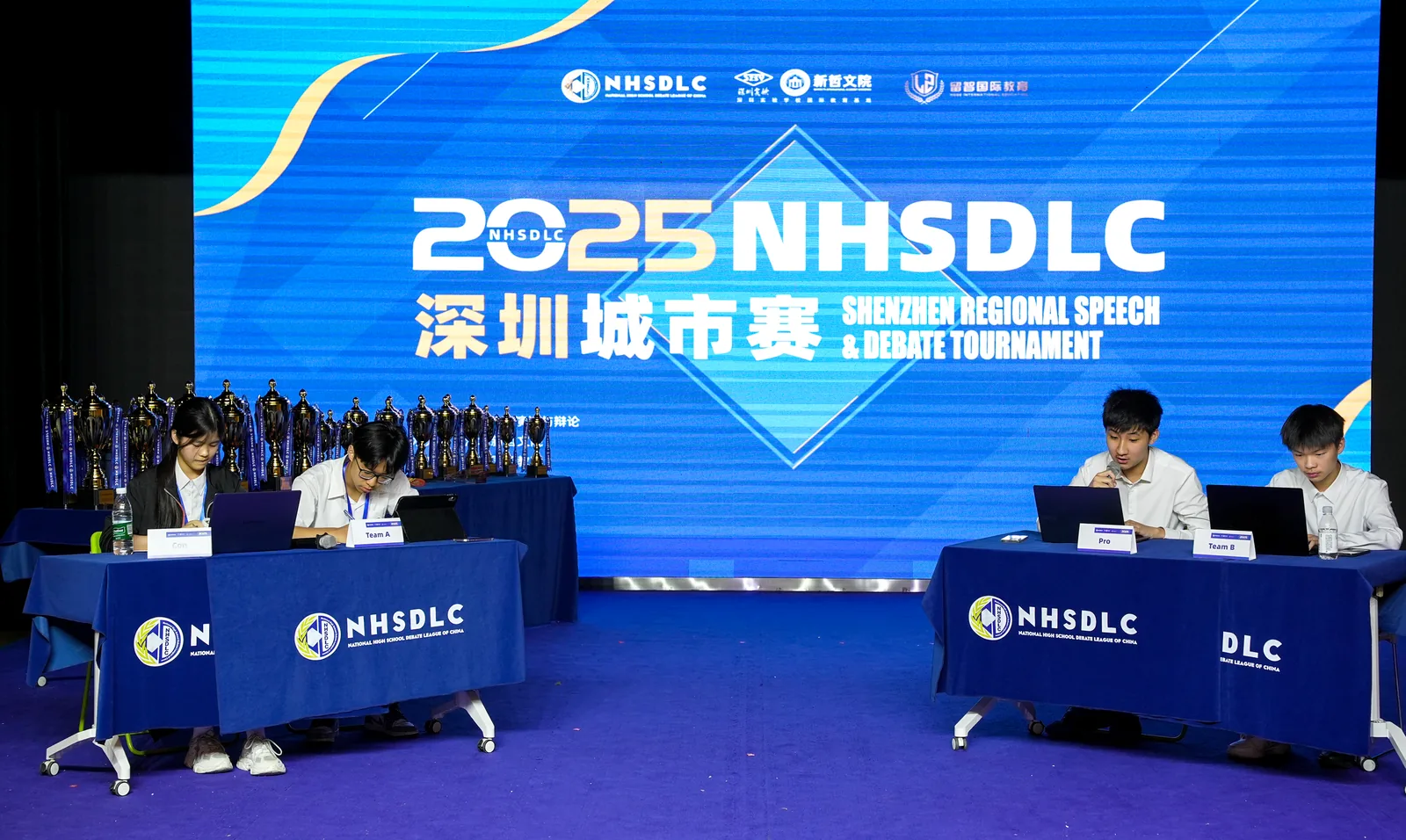
Research, listening, and the nerve to change your mind.
A debate round is a small public health problem: you have incomplete evidence, competing values, and a limited amount of time to make a decision together. The skills transfer more than I expected.
- Research: finding the one number that changes the frame, not the ten that decorate it.
- Listening: tracking the argument someone is actually making, not the one you prepared against.
- Rebuttal: answering the strongest version of the other side.
- Judgment: knowing when the evidence asks you to give up a line you liked.
The point is not to win the room. It is to leave the room with a better question.
A selected record.
Debate gave me my first real audience—and my first real feedback. These are the results I am proudest of, alongside the recognition from the rest of my work.
Debate record
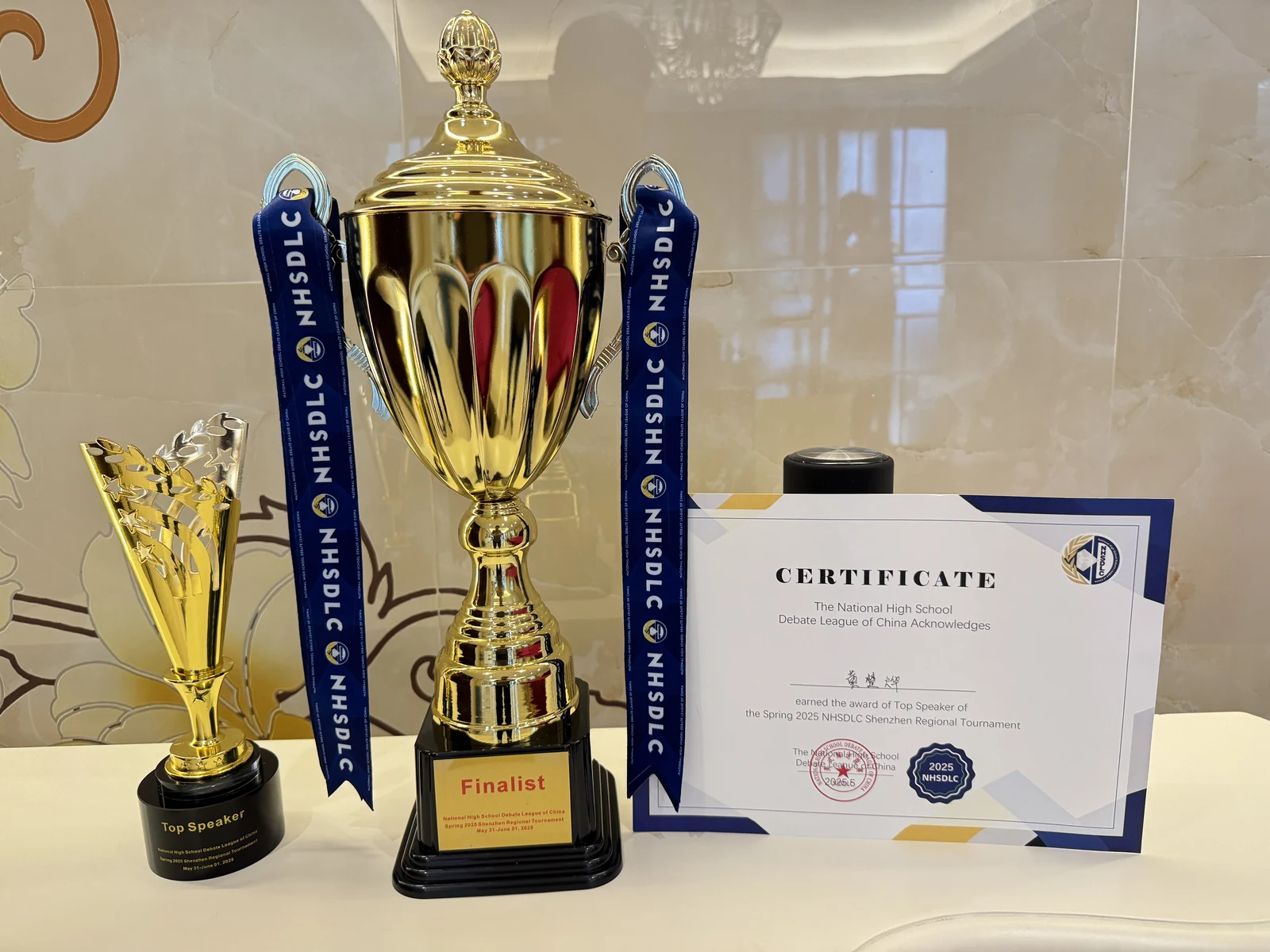
- 2025 Top Speaker & Team FinalistNHSDLC Shenzhen Regional Tournament
- 2023 SemifinalistNHSDLC Guangzhou Tournament
- 2023 QuarterfinalistNHSDLC National Online Tournament
- 2024–26 Founder & PresidentZhixing Debate Club
Other recognition
- 2025 iGEM Gold MedalGCGS team · PHAsco
- 2024 British Biology Olympiad GoldGlobal Gold
- 2025 BIO USACN National SilverBioOlympiad Initiative USA-China
- 2025 John Locke Institute High CommendationTheology · Global Essay Prize
- 2025 Harvard International Review BronzeAcademic Writing Contest
- 2026 Quill and Scroll Honorable MentionStaff Editorial Writing
- 2025–26 GCGS Full Academic ScholarshipDean's List · Top 1%
Debate made me a better public health student.
Debate taught me to make an argument legible. Public health asks me to make evidence usable. Both require the same move: start with the other person's question, not your own answer.
That is why the throughline of this site is not a list of activities. It is a way of working—research deeply, listen first, and make the idea strong enough to survive contact with someone who disagrees.